
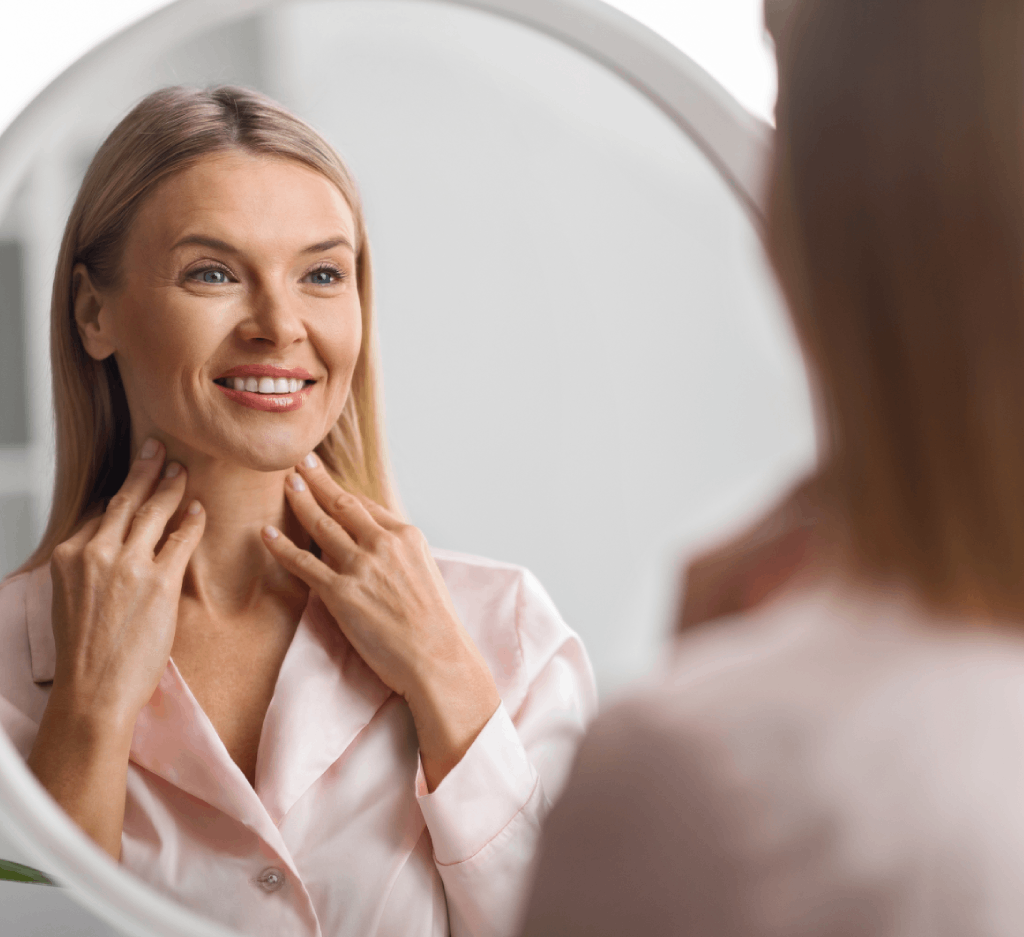
Your genes set the blueprint for how your neck ages, from skin thickness and where you store fat to the overall shape of your jawline. Your daily habits, including sun protection, smoking, posture, and weight stability, can determine how quickly that blueprint shows up.
The neck is often one of the first places to reveal age, and one of the last places most people think to care for. Many patients notice loose skin, vertical bands, or fullness under the chin years before their face shows comparable changes.
At Aesthetic Plastic Surgery, board-certified plastic surgeon Gene Sloan, MD, helps patients understand what’s behind their neck concerns. He explains that knowing why your neck is aging is the first step toward choosing the right treatment. Some of the causes are written into your DNA. Others come down to choices you make every day, and those are the ones you can start changing.
What You Inherit: The Genetic Side of Neck Aging
If your mother or father developed a softer jawline or neck bands in their 40s or 50s, there is a reasonable chance you may follow a similar path. Genetics shape several features that influence how the neck changes over time.
Skin quality
The thickness of your skin and how much collagen and elastin it produces are largely inherited. Thinner skin, or skin with lower natural elasticity, tends to show crepiness and laxity sooner. Fair skin with less melanin also has less built-in protection against UV damage, which makes it more vulnerable to sun-related aging.
Fat distribution
Some people inherit a tendency to store fat beneath the chin, known as submental fat. This is why even fit, slender individuals can struggle with a “double chin” that diet and exercise never seem to touch.
Muscle anatomy
The platysma is a thin, sheet-like muscle running from the jaw to the collarbone. In some people, its inner edges separate and loosen with age, creating visible vertical cords known as platysmal bands. How prominent these bands become can vary from person to person, and inherited anatomy typically plays a role.
Bone structure
A strong chin and well-defined jaw help hold the neck’s soft tissues in a crisp angle. People born with a smaller chin or a lower-set structure in the neck may notice an earlier loss of definition, especially as bone gradually thins with age.
What You Control: Lifestyle Factors That Speed Up Neck Aging
Genetics may load the dice, but lifestyle habits can decide how quickly the results appear. These everyday factors have a meaningful impact on the neck.
Sun exposure
The neck receives nearly as much sun as the face, yet it is frequently skipped when applying sunscreen. Over time, UV rays break down collagen and elastin, leading to crepey texture, sun spots, and the reddish-brown discoloration that usually appears on the sides of the neck.
Smoking
Tobacco restricts blood flow to the skin and accelerates the breakdown of collagen. Smokers typically develop lax, wrinkled skin earlier than non-smokers, and the delicate skin of the neck is no exception.
“Tech neck” and posture
Many of us spend hours each day looking down at phones, tablets, and laptops. Repeatedly folding the skin in the same spot may contribute to horizontal neck lines, and chronic forward-head posture can affect how the neck looks in profile.
Weight fluctuations
Significant or repeated weight gain and loss stretches the skin. Each cycle can leave it a little less able to bounce back, which may result in sagging once the weight comes off.
Skin care and overall health
Many people stop their skin care routine at the jawline. Extending moisturizer, sunscreen, and other recommended products down to the neck and chest helps protect this area. Adequate sleep, hydration, and a nutrient-rich diet also support healthy skin throughout the body.
Where Genetics and Lifestyle Meet
The most noticeable neck aging usually happens when inherited tendencies and lifestyle habits overlap. Someone with naturally thin skin who spends years in the sun without protection, for example, may see laxity much earlier than a sibling who was diligent about sunscreen.
Healthy habits can slow the process, but they can’t fully reverse structural changes like loose skin, stubborn submental fat, or separated platysma muscles. That’s where professional treatment can help. Depending on your anatomy and goals, options may include:
- Medical-grade skin care to improve texture, tone, and discoloration
- Neck liposuction for people with excess fat but good skin elasticity
- Neck lift surgery to tighten loose skin and repair the underlying muscles for longer-lasting definition
Because every neck ages differently, Dr. Sloan can evaluate each patient’s skin quality, fat distribution, muscle tone, and bone structure before recommending a plan. In most cases, the best results come from combining treatment with the healthy habits that help preserve them.
Key Takeaways
- Genetics can influence your skin thickness, fat storage under the chin, platysma muscle anatomy, and jaw and chin structure.
- Sun exposure, smoking, poor posture, and repeated weight fluctuations can all accelerate visible neck aging.
- Extending sunscreen and skin care below the jawline is one of the simplest ways to protect your neck.
- Lifestyle changes can slow aging, but structural concerns such as loose skin and neck bands often require professional treatment.
- A personalized evaluation helps determine whether skin care products, liposuction, or a neck lift best fits your needs.
Whether your neck concerns come from your family tree, your daily habits, or a combination of both, you don’t have to simply accept them. Schedule a consultation with Dr. Sloan in Little Rock to learn which treatment options can help you look as refreshed as you feel.
